

 +35 pts
Photo check-in on siteWe verify the photo's location automatically
About Estadio Nacional
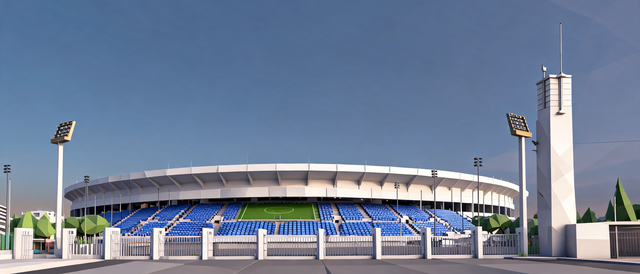
The Julio Martínez Prádanos National Stadium is in Ñuñoa, within Santiago’s 62-hectare National Stadium Sports Park. The complex includes tennis courts, an aquatics centre, a gymnasium, a velodrome, a BMX circuit and an athletics warm-up track. Construction began in 1937, and the stadium opened on 3 December 1938. Its design was based on Berlin’s Olympiastadion, and its land had been donated by philanthropist José Domingo Cañas in 1918.
The stadium’s first sporting event was a 1938 football match between Colo-Colo and Brazil’s São Cristóvão, won 6–3 by Colo-Colo. In 2011, the old wooden section called Escotilla n.º 8 was set aside to remember people detained there after the 1973 coup; it is enclosed by a barbed-wire fence. The stadium was renamed in 2008 for Chilean football commentator Julio Martínez. It has also hosted the 2014 South American Games, plus the opening ceremonies and athletics at the 2023 Pan American Games and the opening ceremony of the 2023 Parapan American Games. Today it is home ground for Chile’s national team and Universidad de Chile.
Facts from Wikipedia: Julio Martínez Prádanos National Stadium
More quests in Santiago
All 9 in Santiago- Santa Lucía HillA volcanic hill hides gardens and stairsNature · Santiago · 4.1 km away
- Arrollado con puréThe pork hides its shape until it is slicedFood · Santiago · 2.9 km away
- ChacareroGreen beans cut across the beefFood · Santiago · 3.8 km away
- TheloniousThe jazz stays close to the late-night barParty · Santiago · 4.7 km away