

 +75 pts
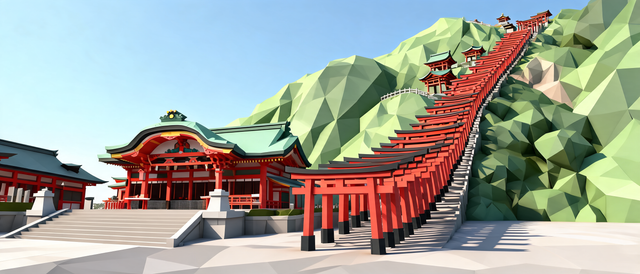
About 10,000 torii were donated by Japanese businesses, turning the route into a long sequence of gates. Roughly 800 stand in a row as the Senbon Torii, while trails continue for 4 kilometres up the 233-metre mountain to smaller shrines. The shrine was founded in 711 by the Hata clan, an influential immigrant group from the Korean Peninsula.
Photo check-in on siteWe verify the photo's location automatically
About Fushimi Inari
Fushimi Inari-taisha is the head shrine of Inari, a kami primarily linked with rice and farming and also worshipped by merchants as a patron of business. Its earliest buildings stood on Inariyama, but the shrine was moved in 816 at the request of the monk Kūkai. The main shrine building dates from 1499. Imperial support began in the early Heian period, and in 965 Emperor Murakami ordered written reports of important events to be delivered to Inari and 15 other shrines.
The lower grounds contain the tower gate and main shrine. Farther along the mountain path, the inner shrine is followed by tens of thousands of small rock altars called otsuka. Citizens placed these private worship sites there, usually with individual names for Inari carved into them. Donating a torii became common during the Edo period as a way to mark a fulfilled wish or express thanks. Foxes, regarded as Inari's messengers, are often found at Inari shrines, often holding a rice-store key in their mouths. Unlike many Shinto shrines, the main object of worship, a mirror, can be seen.
Facts from Wikipedia: Fushimi Inari-taisha